Publishing a book in Canada has become more accessible than ever before, giving authors multiple pathways to bring their ideas to life. The two most common routes are self-publishing and traditional publishing, each offering unique advantages, challenges, and levels of control. For many writers, the decision depends on budget, creative freedom, timeline, and long-term career goals.
In today’s digital era, Canadian authors are no longer limited by gatekeepers. Whether you are a first-time writer or an experienced storyteller, understanding both publishing models is essential before making a final decision. This guide breaks down both options in detail to help you choose the right path for your book journey.
Self-publishing refers to the process where an author independently publishes their book without relying on a traditional publishing house. In this model, the writer controls everything—from writing and editing to design, formatting, pricing, and marketing.
One of the biggest advantages of self-publishing is creative freedom. Authors can choose their cover design, editing style, and even publishing timeline. Platforms like Amazon Kindle Direct Publishing (KDP) and other digital marketplaces make it easy for Canadian authors to publish globally within days.
However, self-publishing also requires more responsibility. Authors must invest in editing, proofreading, marketing, and distribution on their own. This is why many writers look for professional support services to ensure quality results.
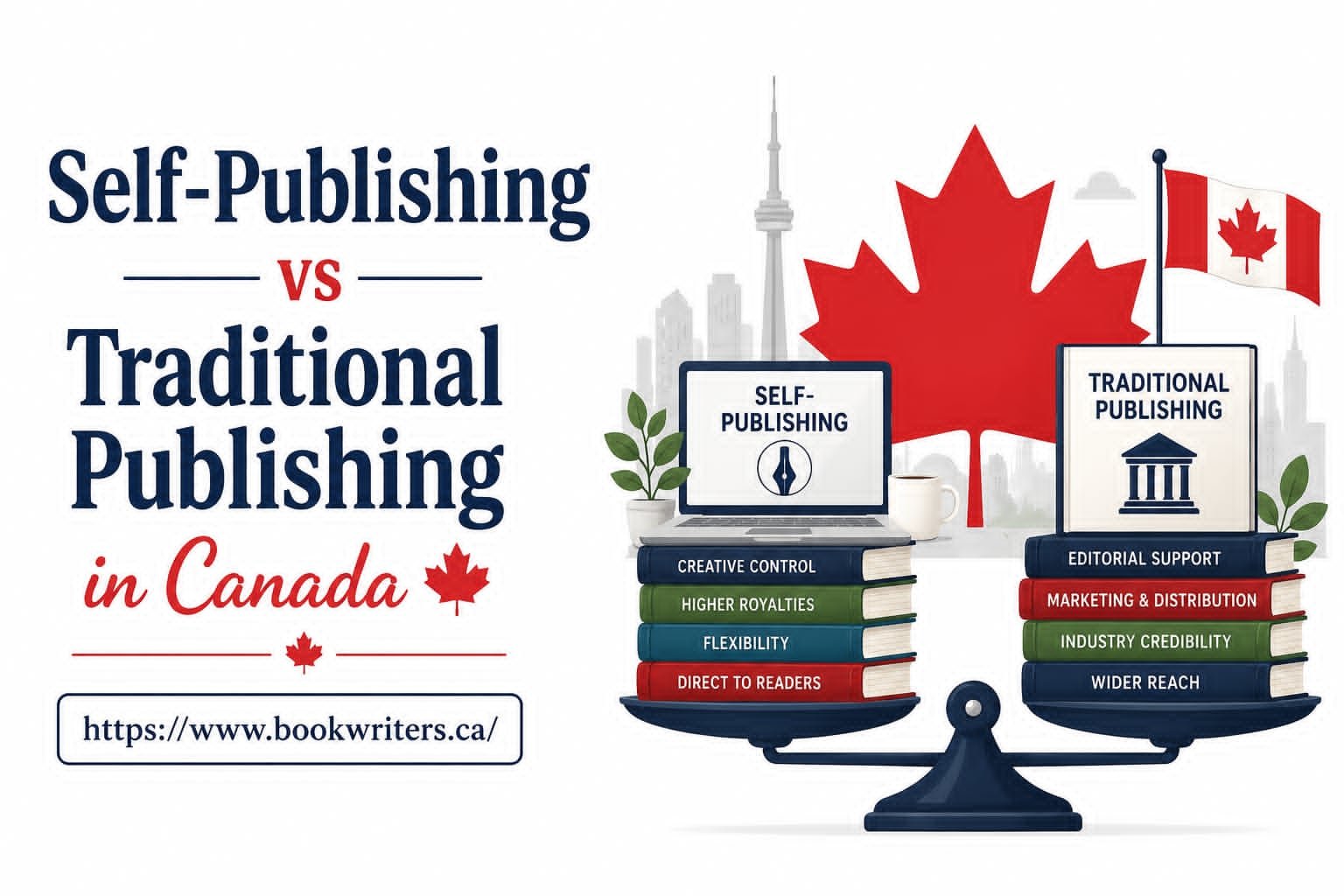
Self-publishing offers several benefits for modern authors in Canada. First, it provides full control over the creative process, allowing writers to maintain their original vision. Second, authors earn higher royalties compared to traditional publishing. Third, the publishing process is much faster and does not involve long approval delays.
Additionally, self-publishing allows niche writers to succeed without needing mass-market approval. Whether it’s fiction, business books, or memoirs, authors can reach their audience directly.
Despite its advantages, self-publishing comes with challenges. Authors must handle editing, formatting, and marketing themselves, which can be overwhelming. Poor editing or design can also affect book credibility and sales performance.
This is where professional writing and editorial assistance becomes valuable. Many authors work with industry experts to ensure their manuscript is polished and market-ready before publishing.
Traditional publishing involves submitting a manuscript to a publishing house that evaluates, edits, publishes, and distributes the book. If accepted, the publisher covers production costs, including editing, printing, and marketing.
This route is considered more prestigious and competitive. Publishers often select books based on market potential and quality standards. Authors usually work with literary agents to get their manuscripts noticed.
While traditional publishing provides strong credibility and wide distribution, it can take months or even years to secure a deal.
One of the main advantages of traditional publishing is professional support. Authors receive expert editing, cover design, and marketing from experienced teams. Distribution is also much wider, often reaching bookstores, libraries, and international markets.
Another benefit is reduced financial risk for authors, as publishers handle production costs. This makes it an attractive option for writers who prefer a more guided process.
Traditional publishing has its downsides. The acceptance process is highly competitive, and many manuscripts are rejected. Even after acceptance, authors often lose some creative control over content, title, and design.
Additionally, royalty percentages are lower compared to self-publishing, and authors may have to wait longer for publication and earnings.
Choosing between self-publishing and traditional publishing depends on your goals as an author. If you want full creative control and faster results, self-publishing may be the right choice. If you prefer professional support and broader distribution, traditional publishing may suit you better.
Many Canadian writers also choose a hybrid approach—combining professional editing and ghostwriting support with self-publishing platforms for better results.
Regardless of the publishing route, high-quality writing and editing are essential. Many authors in Canada rely on professional services to refine their manuscripts before publishing. Expert editors help improve grammar, structure, tone, and readability, making the book more appealing to readers and publishers alike.
Some writers also collaborate with experienced ghostwriters who help transform ideas into fully developed manuscripts while maintaining the author’s voice and vision.
The Canadian publishing industry is competitive and constantly evolving. Whether you choose self-publishing or traditional publishing, quality plays a major role in success. That is why many authors work with experienced professionals who understand market trends and publishing standards.
For example, services like Book Writers of British Columbia provide structured writing and publishing assistance tailored for Canadian authors. Similarly, many writers search for Book editors near me to ensure their manuscripts meet professional standards before publication. Others prefer working with Book Ghostwriters Online to turn ideas into complete, publish-ready books without compromising quality.
These services help bridge the gap between raw ideas and successful published books.
Both self-publishing and traditional publishing in Canada offer valuable opportunities for authors. The right choice depends on your goals, resources, and desired level of control. With proper guidance, editing, and writing support, any author can successfully publish a high-quality book and reach a global audience.
Ultimately, the key to success lies not just in choosing a publishing path, but in ensuring your manuscript is professionally developed, well-edited, and strategically positioned for readers.

Mr. Robert Willson is one of the few geeks who never gets tired when it comes to technology. From the latest gadgets to AI and machine learning, Mr. Willson translates them into easy-to-digest insights. Where there is tech, there is him!