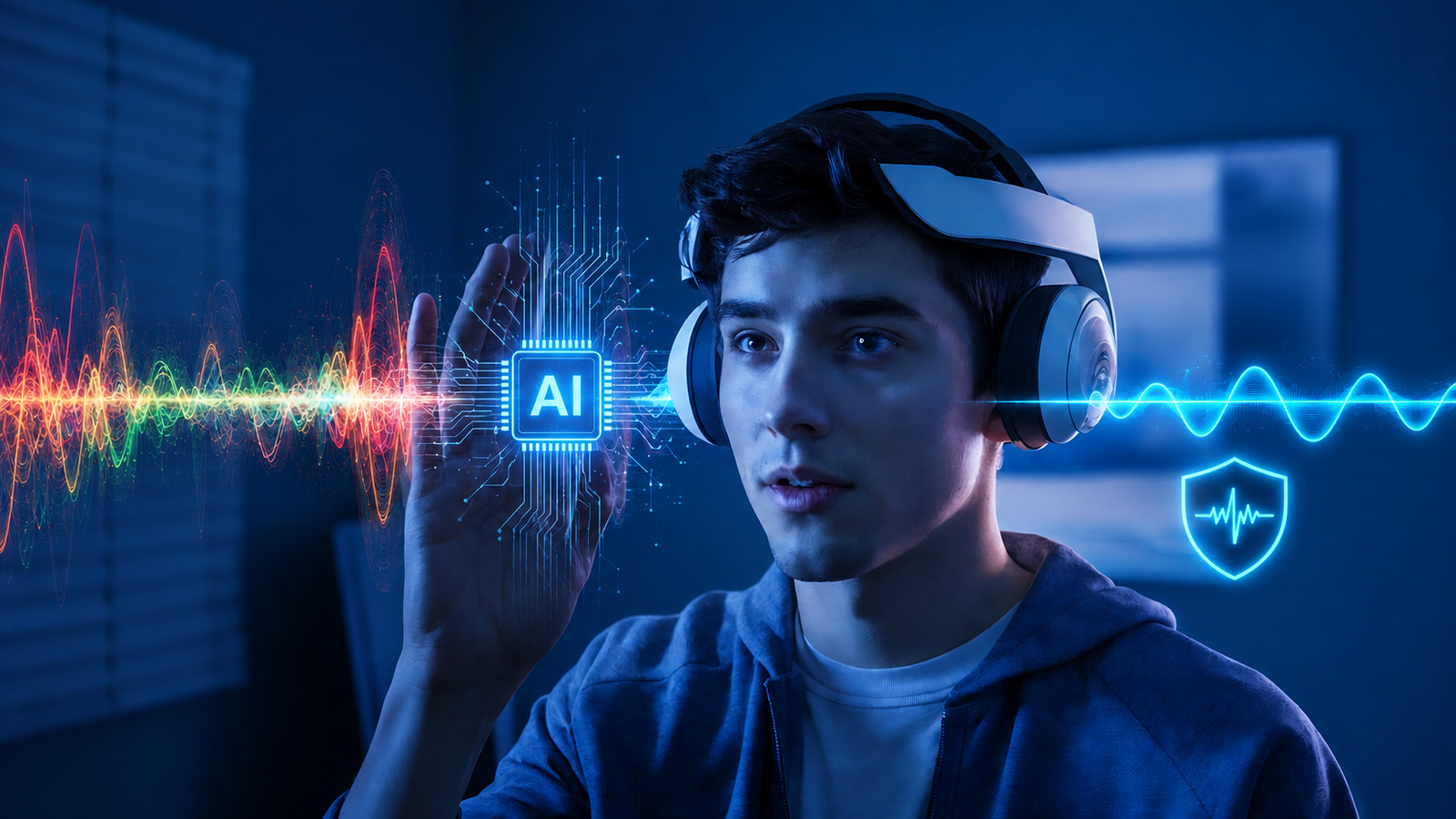
I used to feel overstimulated during my morning commute on the subway. The constant mix of train noise, conversations, station announcements, and background chatter made it difficult to focus or relax. Unlike traditional noise cancellation, AI can adapt to changing environments and prioritize important audio. From headphones and video conferencing, AI is making audio experiences clearer and more personalized.
Whether you’re working in a busy office, traveling on a crowded train, or attending a virtual meeting from home, unwanted noise can be distracting. AI noise cancellation not only provides you with a smooth hearing experience but also removes unwanted sounds, transforming your auditory senses.

Whether in Podcast Recording or daily communication, how AI improves noise cancellation is commendable. However, the real world is filled with noise, all acting as “invisible killers” of audio quality. Traditional Active Noise Cancellation (ANC) works by using microphones to generate opposite sound waves to cancel them out. Instead of simply blocking external sounds, AI technology balances noise suppression with natural vocal fidelity in complex environments.
Next-generation audio gadgets use algorithms and advanced technology to understand different sound environments. AI can recognize specific noises and decide which sounds should be reduced and which should remain audible.
Apple Inc. AirPods Pro use smart noise cancellation technology. It uses adaptive audio and machine learning algorithms to adjust noise control based on the user’s surroundings. The system can reduce unwanted sounds and reduce auditory irritation, offering a smooth user experience.
According to Sundar Pichai, AI is one of the most important things humanity is working on.” This statement reflects how AI technologies are becoming an important part of everyday life.From improving search results and language translation to powering smart assistants and healthcare innovations, AI is helping people work more efficiently and make better decisions.
AI produces real-time noise suppression. The noise cancellation works for loud, effective, and consistent sounds such as airplane engines, air conditioners, or traffic hum, barking dogs, or construction work, etc.
Traditional noise cancellation technology has helped reduce background sounds for years, but recent advancements in AI are modifying it to a completely new level.
There are different ways in which machine learning enhances ANC. This is done by continuously analyzing surrounding sounds and adapting noise reduction in real time.
There are 2 levels of the AI noise cancellation system,
Light Mode: Perfect for indoor settings, while maintaining a natural ambient feel.
Strong Mode: Engineered for extreme outdoor conditions, even in the most chaotic acoustic environments
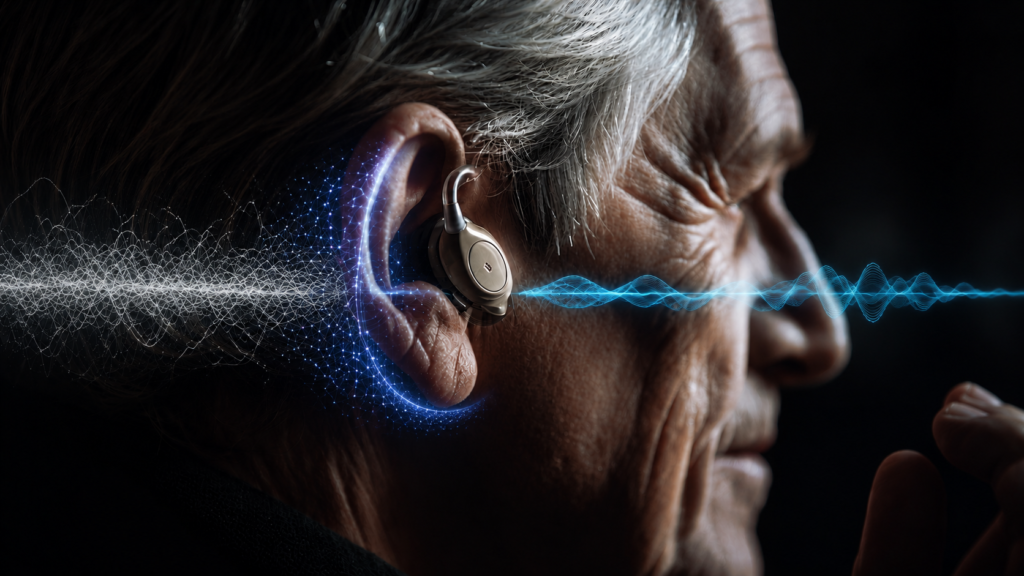
The best AI noise cancellation headphones create a more comfortable listening experience, particularly in crowded environments such as restaurants, shopping centers, and public events.
It precisely identifies unique harmonic structures, pitch, and speech patterns. Smart consumer electronics can identify, analyze, and suppress unwanted sounds more accurately than ever before.
AI ENC earbuds are among the most popular examples of modern noise cancellation technology. They use machine learning algorithms to analyze surrounding sounds and adjust noise reduction levels in real time. From headphones and smartphones, AI is revolutionizing how we experience sound.
Decibels (dB) are the key metric. From a technical standpoint, high-quality AI output drastically reduces the manual labor of fixing vocal distortion. During the COVID-19 pandemic, remote work and online meetings became a daily necessity for millions of people worldwide. To improve call quality, Google Meet introduced AI-powered noise cancellation to erase unwanted background sounds. This helped in achieving a balance between clear modulation and audio protection.
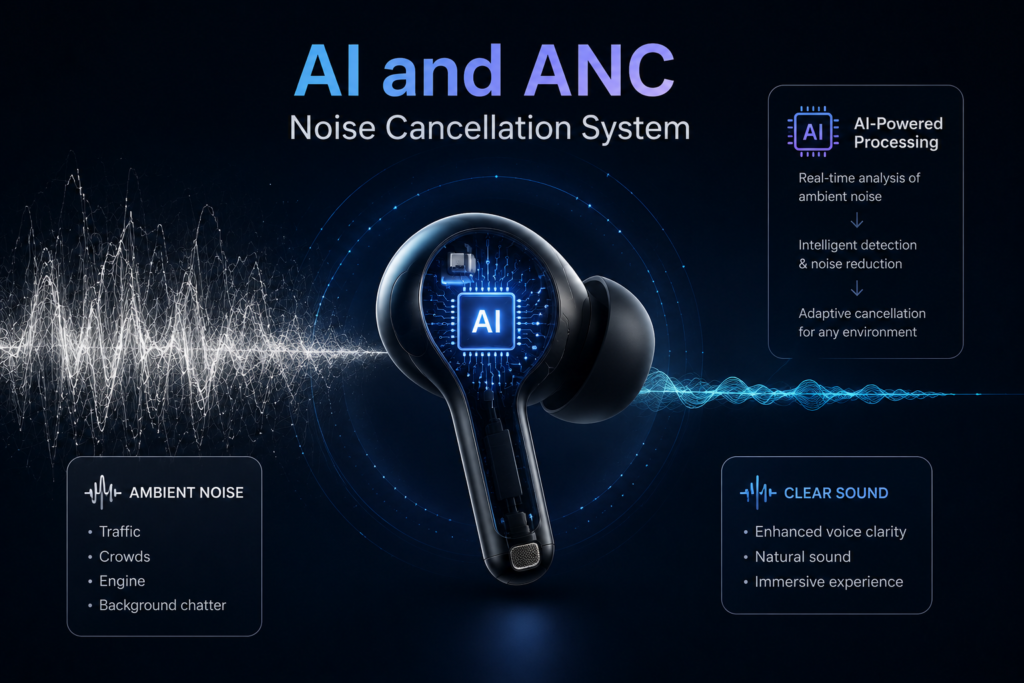
The debate between AI noise cancellation and ANC will never end. Traditional Active Noise Cancellation (ANC) primarily blocks consistent background noises by generating opposite sound waves. While AI noise cancellation goes a step further. More advanced technology helps it to recognise different types of sounds accurately. This makes AI-powered systems more adaptive and effective in dynamic real-world environments.
According to Jensen Huang, “AI is the most powerful technology force of our time.” This perspective helps explain why AI-powered innovations, including advanced noise cancellation systems, are rapidly becoming the auditory gateway to modern communication and audio devices.
| Industry | How AI Noise Cancellation Helps |
| Consumer Electronics | Clearer music, calls, and media playback |
| Remote Work | Better virtual meetings and collaboration |
| Healthcare | Enhanced speech clarity in hearing aids |
| Automotive | Improved voice control and reduced cabin noise |
| Customer Service | Higher-quality customer interactions |
| Education | Clearer online learning experiences |
| Gaming & Streaming | Professional-quality voice communication |
AI is not “magic.” Some AI systems continuously process environmental audio data. AI noise reduction is a tool to improve signal quality, but it cannot replace good wireless mic recording.
A few ways to get a crystal clear audio
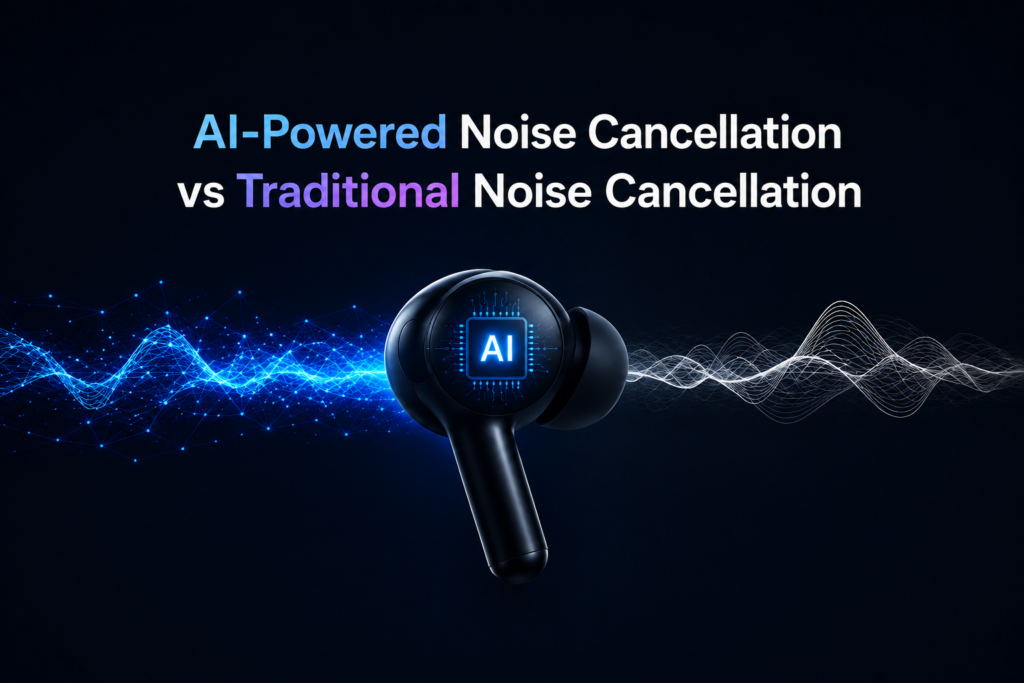
| Traditional Noise Cancellation | AI-Powered Noise Cancellation |
| Works best with predictable sounds | Handles complex and changing environments |
| Uses fixed noise-filtering methods | Continuously learns and adapts |
| Limited personalization | Personalized listening experience |
| Struggles with speech separation | Better voice isolation and clarity |
While traditional noise cancellation relies on predefined methods, AI-powered noise cancellation brings a more intelligent and responsive approach. AI can make real-time adjustments that improve audio clarity and create a more natural listening experience.
This advancement is particularly valuable in situations where sound conditions change frequently, helping users stay focused and communicate more effectively across different environments.
AI is redefining noise cancellation by turning passive sound filtering into intelligent audio management. This provides accurate and crystal clear sound effects while fading out the less important ones. As AI continues to evolve, users can expect clearer conversations, more immersive entertainment, and smarter audio experiences across everyday devices. The future of noise cancellation is no longer just about silence—it’s about delivering the right sound at the right moment. If you are interested in technology and its advancements, share your tips at Write for Us Technology.
AI-powered noise cancellation uses artificial intelligence to identify and reduce unwanted sounds.
Adaptive noise cancellation automatically adjusts noise reduction levels based on changes in the surrounding environment.
AI analyzes sound patterns and noise orientations in real time, helping devices distinguish between different noises and deliver clearer audio.
In most environments, yes. AI noise cancellation is generally more effective than standard ANC because it can adapt to changing sounds and improve voice clarity.

As a tech-savvy Digital Marketing Specialist at Digital Concepts for the past five years, Sushmita Banerjee bridges the gap between complex tech and impactful storytelling. She channels her expertise into writing thought-provoking content covering everything from AI and software to the latest gadgets and breakthrough tech trends.
 AI Robots for Home Use: Transforming Everyday Living With Smart Technology
 AI Tools to Track AI-Generated Content
 How AI Anti-Cheat Is Changing Competitive Gaming
 Why Your Squarespace Filter Sidebar Might Be Invisible to ChatGPT?
  What is RAG (Retrieval-Augmented Generation)? & how it works & how it improves AI accuracy