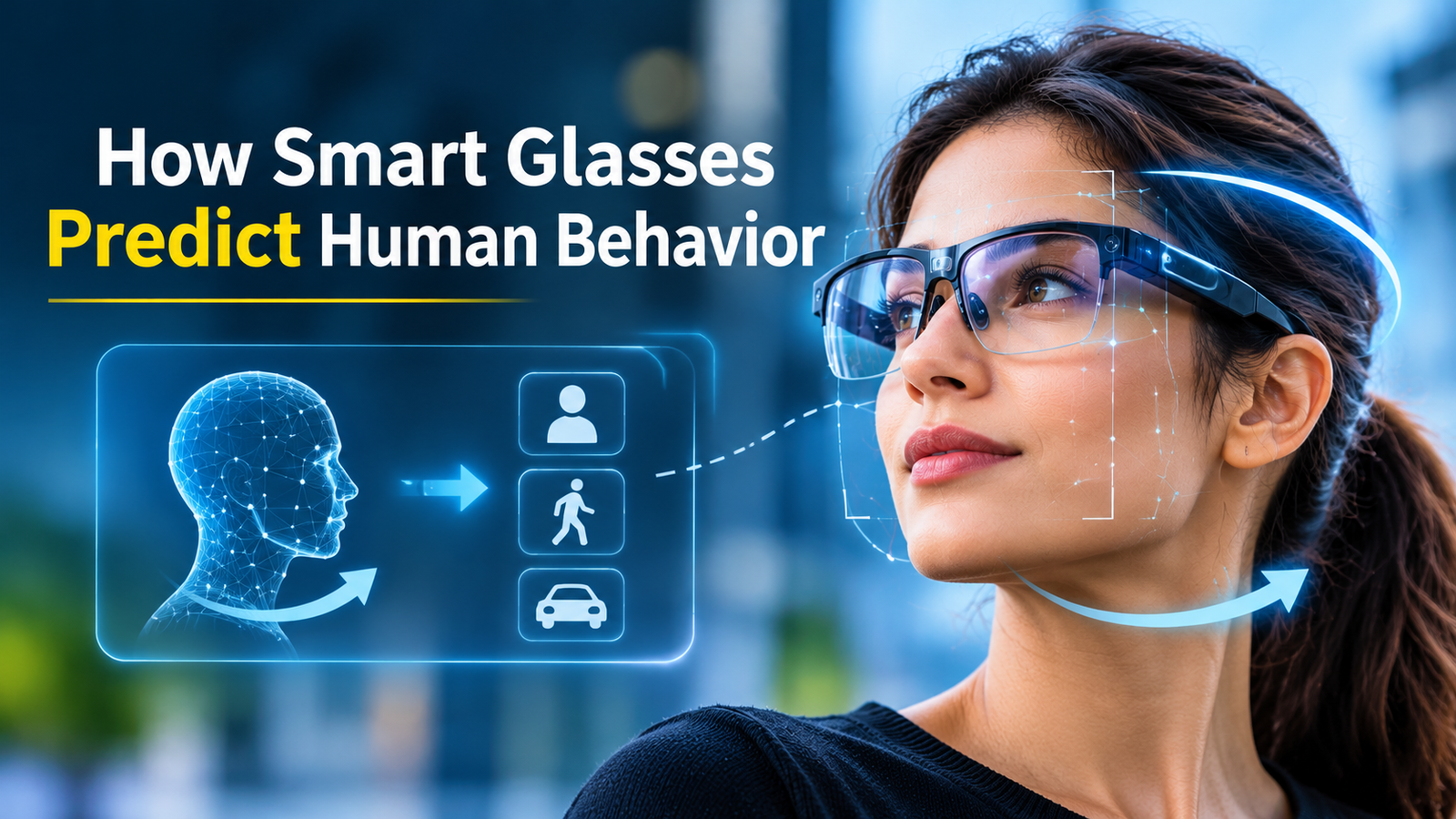
We move our heads to communicate. It’s just a basic human function. We shake to mean no, nod to mean yes, tilt our heads when we’re confused, and so on. Now, our head movements are even influencing technology!
Currently, Meta Glasses combine cameras, AI, and IMU sensors to capture movement, understand context, and respond to what is happening around you. And currently, they are being trained to understand human head movements.
Yes, you read that right. Human activity recognition smart glasses can turn these subtle signals into data, opening a new window into how technology understands human behavior. What looks like ordinary eyewear could become a device that learns how we interact with the world. Here’s how.
Smart glasses are considered the next breakthrough in wearables. As the successor to smartwatches and smart earwear, they extend reality by immersive embedding of content in the user’s field of view.
According to a Reddit survey, today’s strongest use cases are hands-free audio, AI assistance, accessibility, translation, navigation, and first-person recording, while many users still see true AR and contextual information as the technology’s bigger future opportunity.
The two most prominent brands of Smart glasses include:
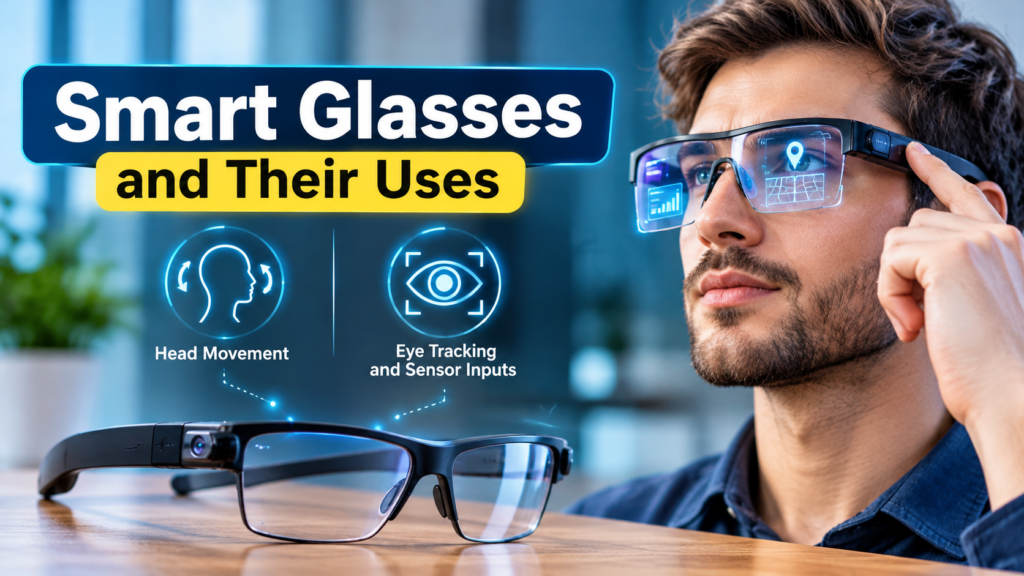
Smart glasses have moved quickly from niche tech experiments to products people actually use day to day. At a glance, they look like ordinary eyewear, but inside the frames are compact processors, sensors, and wireless components. Here’s how they predict human behaviour.
Activity recognition smart glasses capture head movement using an Inertial Measurement Unit (IMU)—a hardware module built with accelerometers and gyroscopes that continuously measure changes in linear motion, rotation, and orientation.
The IMU is the invisible backbone of the Meta smart glasses experience. Without it, the glasses would lose their ability to understand how you move through the physical world. There are three types of IMU used in Meta glasses, which are:
For example, when you turn toward a shelf and then look down at a product, the sensors record the sequence of movements. AI models can analyze these patterns over time to help identify what you are doing, rather than relying on a single head movement.
Smart glasses motion sensors are aware of the surrounding environment. The eyewear has built-in tech that adds hands-free features like audio, built-in cameras, a small display, or a combination of these features. Eye tracking and cameras make smart glasses’ behavioral predictions more accurate by adding context to head movements.
For example, if a person turns their head, the head-movement tracking sensor can identify the objects in view, while eye tracking can determine which product they are actually looking at.
Head movements can provide clues about a person’s activity when analyzed as part of a larger movement pattern. Here’s how:
According to Sky MEMS, an IMU (Inertial Measurement Unit) is an electronic device that measures and reports an object’s acceleration and rotation (angular velocity); other uses include:
But why do Meta glasses need an IMU? Here are a few reasons:
For Instance: DHL’s use of smart glasses for warehouse “vision picking.” Workers wear the glasses while picking products, and the system displays visual instructions showing where to go and which items to collect.
IMU doesn’t just record your patterns. The data it collects can help machine-learning models. This creates a connection between recording movement and recognizing patterns, potentially helping smart glasses become more context-aware.

Machine-learning models and smart glasses with edge computing can analyze patterns in head movement over time rather than treating each movement as an isolated event.
For example, if smart glasses detect a sequence of turning toward an object, looking down, pausing, and moving closer, the model may classify it as object inspection or preparation to interact with the object. The prediction comes from comparing the movement sequence with patterns learned from training data.
But this is not a guaranteed feature. There’s potential in this, but head movements alone cannot reliably establish human intention.
Smart glasses can treat head orientation as a continuous time-series signal rather than simply detecting individual movements. Here’s what you need to know
Smart glasses and AI glasses might sound similar, but the difference is in how they empower you to interact with the world around you. Follow the table below to learn the differences.
| Feature | Smart Glasses | Meta AI Glasses |
| Purpose | Adds digital features to eyewear | Adds AI-powered assistance |
| AI | May or may not have AI | Built around Meta AI |
| Camera | Depends on the model | Built-in cameras |
| Audio | May include speakers | Speakers and microphones |
| Examples | AR, navigation, industrial glasses | Ray-Ban Meta |
| Key difference | Technology-focused | AI + camera + audio focused |
Smart glasses can turn ordinary raw motion signals into personal information. When head orientation is tracked continuously, the movement patterns can reveal routines. But the pros and cons of smart glasses exist. Just as they let you take calls, listen to music, or capture photos without pulling out your phone, they also have some disadvantages, including privacy concerns.
According to CBS Mornings, a woman discovered she had been secretly filmed by a man wearing Meta’s AI-powered smart glasses when friends and people she hadn’t talked to in years sent her a video posted on social media. Reuters has also reported how many countries (such Norway, the UK, or Australia) are also considering or have banned Meta glasses under certain conditions. This creates questions about consent, data storage, facial recognition, and how companies use behavioral data.

Evan Spiegel, CEO of Snap Inc., described the moment as a new era in computing. However, as you have been reading, privacy breaches are a major concern.
On the other hand, smart glasses have the opportunity to move beyond experimental augmented reality devices.
Meta Glasses are evolving from simple smart eyewear into an AI-powered assistant that can understand the wearer’s surroundings, respond to voice commands, and provide useful information in real time. But there’s still space for improvement, both technically and ethically. So, right now, we can wait and watch how Meta glasses will change over time.
If you are interested in blogs related to technology, then feel free to share your tips at Write For Us: Tech Blog.
An Inertial Measurement Unit (IMU) uses accelerometers and gyroscopes to measure head movement, acceleration, and orientation. AI models can analyze these signals over time to identify movement patterns.
IMU data alone can help classify physical activities based on movement patterns. However, without a camera or other contextual sensors, the glasses generally cannot determine what object or environment the person is interacting with.
Head orientation can indicate where the head is pointing, but it does not necessarily show where the eyes are focused. Eye tracking can provide additional information about the user’s actual gaze.
Head movements are often ambiguous and can have several meanings. Sensor noise, individual movement styles, limited training data, and similar movement patterns can reduce accuracy. Most importantly, head movement can indicate a probable activity or attention shift, but it cannot reliably reveal a person’s thoughts, intentions, or emotions.

As a tech-savvy Digital Marketing Specialist at Digital Concepts for the past five years, Sushmita Banerjee bridges the gap between complex tech and impactful storytelling. She channels her expertise into writing thought-provoking content covering everything from AI and software to the latest gadgets and breakthrough tech trends.
 How Big Tech Companies Are Managing AI Risks and Whether It’s Enough
 How Smart Glasses Turn Head Movements Into Predictions About Human Behavior
 How Big Tech Companies Are Managing AI Risks and Whether It’s Enough
 How Silent Hardware Changes Are Changing the Gaming Experience
 From Screen to Share: Best Recording Software for Windows & Mac