
As a content writer, checking content for authenticity can be tricky. Over time, I’ve learned to spot AI-generated writing simply by analyzing its patterns. Ironically, when sentences flow too smoothly and the grammar is completely flawless, that’s usually my first red flag that a machine might be behind it.
However, I began relying more heavily on AI tools like ChatGPT as my writing workload grew (if you want to get better results from these tools, check out our guide on how to use ChatGPT effectively). However, as I integrated AI on a larger scale, I turned to AI content detectors to keep my work balanced and authentic.
Unlike human writing, which naturally carries small flaws and unique quirks, AI-generated content is often polished to a fault. This is where AI content detectors step in—analyzing writing patterns to pinpoint the exact sections most likely created by a machine.
Over time, as I integrated AI tools on a much larger scale, I turned to AI-generated content detectors to keep things in check. These tools analyze written content to estimate whether it’s human-written or machine-generated.
These tools help editors quickly identify copied or heavily generated sections by analyzing sentence structures and language patterns to produce detailed reports. While I use these insights to guide my writing, an AI score isn’t definitive proof of authorship. Ultimately, human judgment remains essential.
With so many AI detection tools on the market, choosing the right one is key to getting accurate results. Below, we’ll explore some of the top AI detectors available today and how to use them effectively.
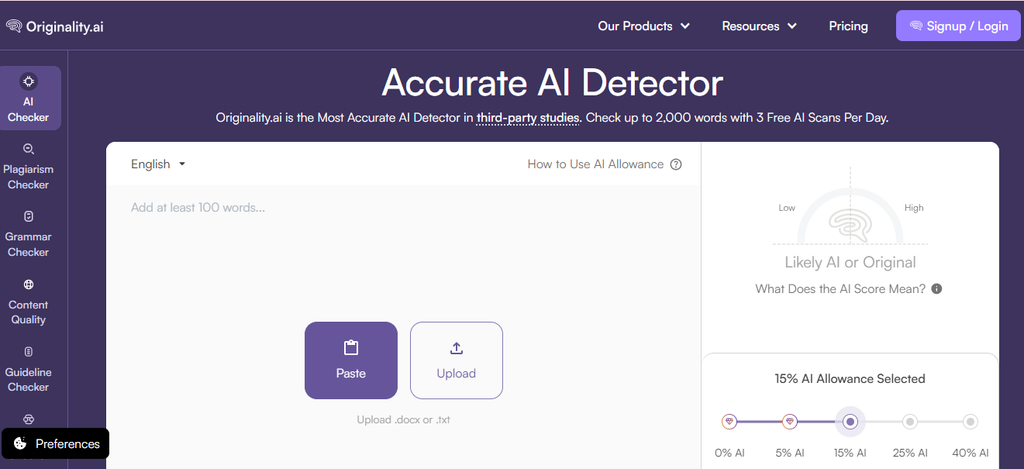
I have used this AI content detector to scrutinize my content. Originality.ai is built for writers, publishers, marketers, and content teams.
This AI detection tool is best for straightforward content checks to understand and evaluate the content better.

This is also a type of AI detection tool that offers high-quality raw text and supports more than 20+ languages.
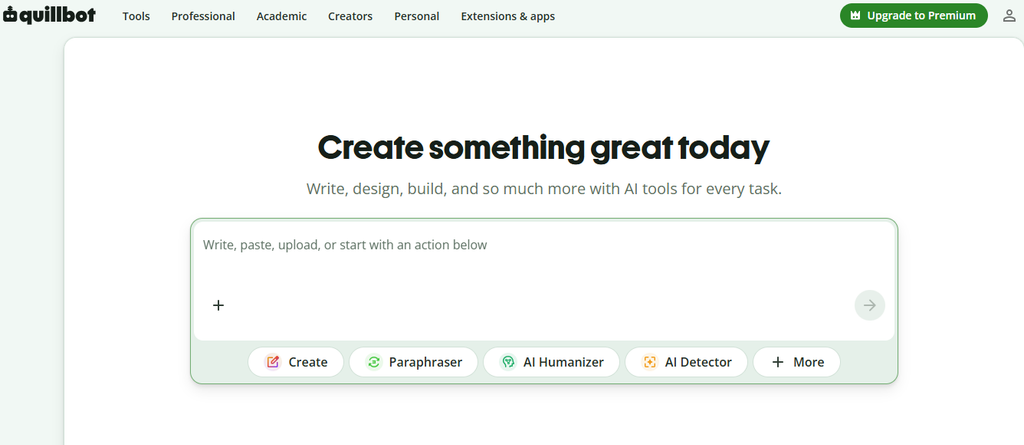
QuillBot’s AI checker analyzes text for patterns associated with AI-generated writing and provides a report accordingly.
I have also used Humalingo to recheck my content. Just like a few other tools, it is praiseworthy.
Here’s a quick snapshot of what each tool brings to the content-checking process.
| Tool | What Makes It Stand Out |
| Originality.ai | Built for professional content teams and publishers |
| ZeroGPT | Quick and simple AI-content screening |
| Copyleaks | Strong multilingual detection capabilities |
| QuillBot | Combines AI detection with writing assistance |
| Humalingo | Pairs AI detection with content humanization |
| Human Review | Adds the context and judgment AI scores cannot provide |
As I have been into content writing, I have realised the smartest approach is to combine AI detection with human editorial review to maintain proper AI detection algorithms. Do not depend fully on AI tools, as the results may vary. Technical studies on arXiv show that detection algorithms can produce false positives, especially with non-native writing or polished text.
Google Search Central backs this up as well, stating that an AI detector should not be completely relied on. You should use your human instincts to analyse content.
AI detection tools act as a helper that helps to curate human-generated content. AI detection tools act as a helper to curate high-quality content. As outlined in Google’s AI content guidelines, the key to ranking well isn’t avoiding AI completely, but ensuring the final piece demonstrates genuine value, accuracy, and human effort
You should not be completely dependent on the AI verdict. Remember, the best editing tool is always human. It is with human effort and a bit of AI research that content stands out. If you are interested in AI-generated content and its characteristics, feel free to share your tips at Techno Blogs: Write for us.
A tool that analyzes writing patterns. AI content detector differentiates between AI content and human-generated content for proper evaluation.
AI detectors can produce false detections and misguide the user in some cases. Treat the score as a signal and combine it with human review. Do not blindly follow the AI evaluation pattern.
AI detectors can identify if your content is copy pasted from platforms like ChatGPT. However, detection is not guaranteed if content is rewritten many times.
There is no single detector that can be considered the most accurate for every SEO article. Each AI content detector has its own characteristics. So it depends solely on the platform you are using and its features.
SEO professionals can use them as part of a broader editorial workflow to review content and analyse writing style. Remember, AI content detector tools cannot solely be relied on.
The prices are not fixed. They vary significantly with each tool. Many tools offer free versions, while advanced versions are generally paid.

As a tech-savvy Digital Marketing Specialist at Digital Concepts for the past five years, Sushmita Banerjee bridges the gap between complex tech and impactful storytelling. She channels her expertise into writing thought-provoking content covering everything from AI and software to the latest gadgets and breakthrough tech trends.
 AI Tools to Track AI-Generated Content
 How AI Anti-Cheat Is Changing Competitive Gaming
 Why Your Squarespace Filter Sidebar Might Be Invisible to ChatGPT?
  What is RAG (Retrieval-Augmented Generation)? & how it works & how it improves AI accuracy
 Modern Website Architecture: The Secret Behind Fast, Scalable Websites