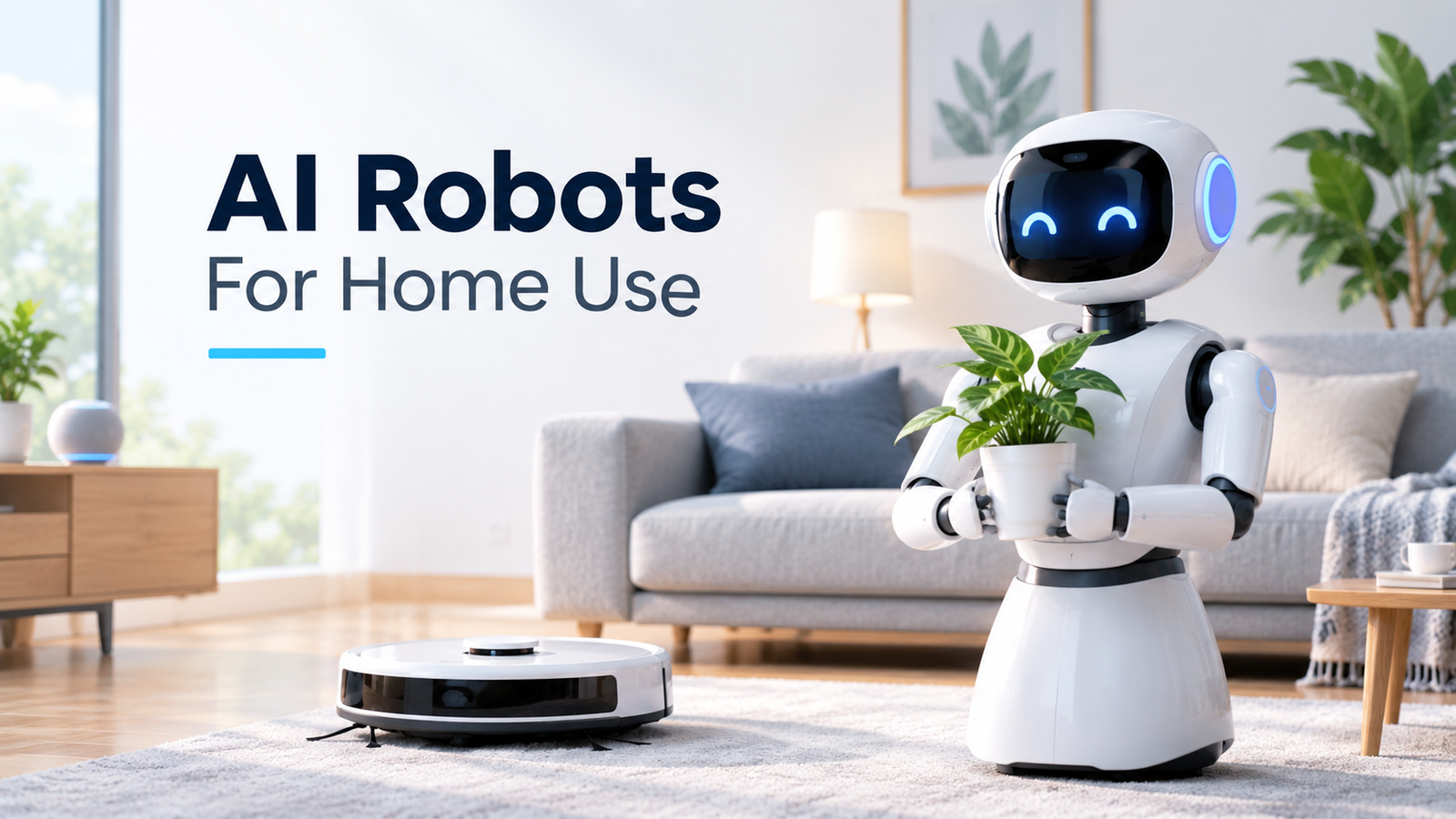
An AI robot for home combines robotics hardware with technologies such as sensors, computer vision, machine learning, and AI-powered decision-making.
Unlike basic automated appliances, these machines can collect information about their surroundings and respond to it within their programmed capabilities. Intel explains that AI can help robots perceive their environment, process information, and make decisions. This technology is driven by:
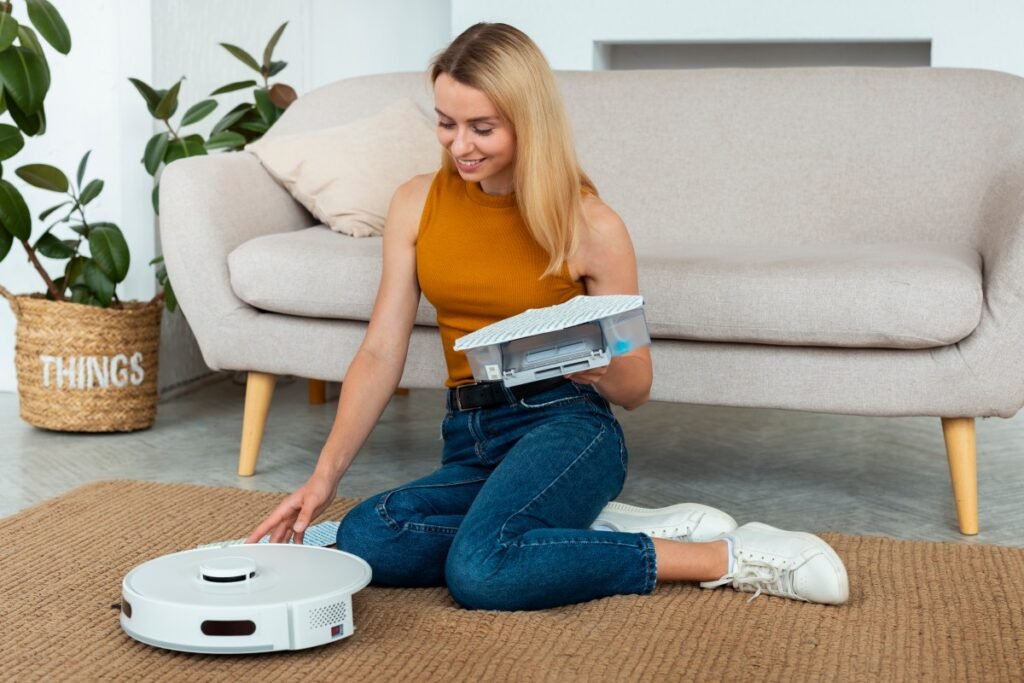
Cleaning remains one of the most practical uses of home robotics. Modern robotic vacuums and mops can map rooms, detect obstacles, plan routes, and run according to a schedule.
Some models also recognize objects and adjust their cleaning behavior:
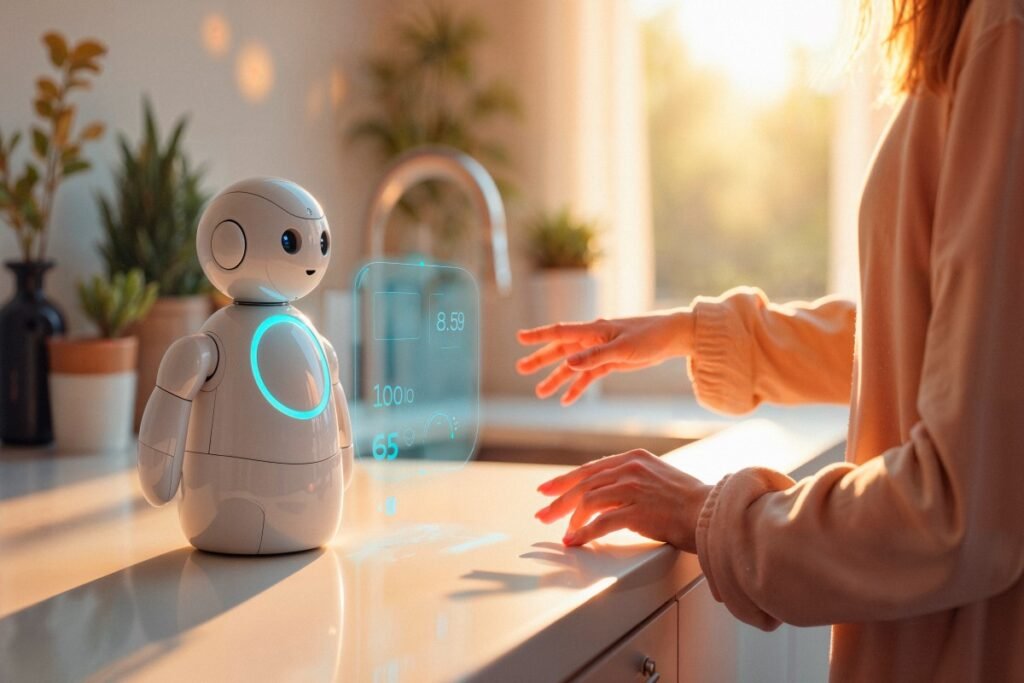
Your robot doesn’t necessarily have to work alone. Connected devices can form part of a wider smart-home system.
For example, you might schedule a cleaning robot to start when you leave for work. Depending on the model and ecosystem, your AI robot may also work alongside connected lights, speakers, security devices, or other appliances.
The important thing is compatibility. Always check which platforms and devices a robot actually supports before buying it.
A personal home robot can also provide remote monitoring. Depending on its design, it may use cameras, microphones, motion sensors, or other sensors to help you check on your home or pet.
Some social robots are designed to interact with users through conversation, games, or reminders. These applications may be particularly useful for certain households, but they shouldn’t be treated as substitutes for professional care.
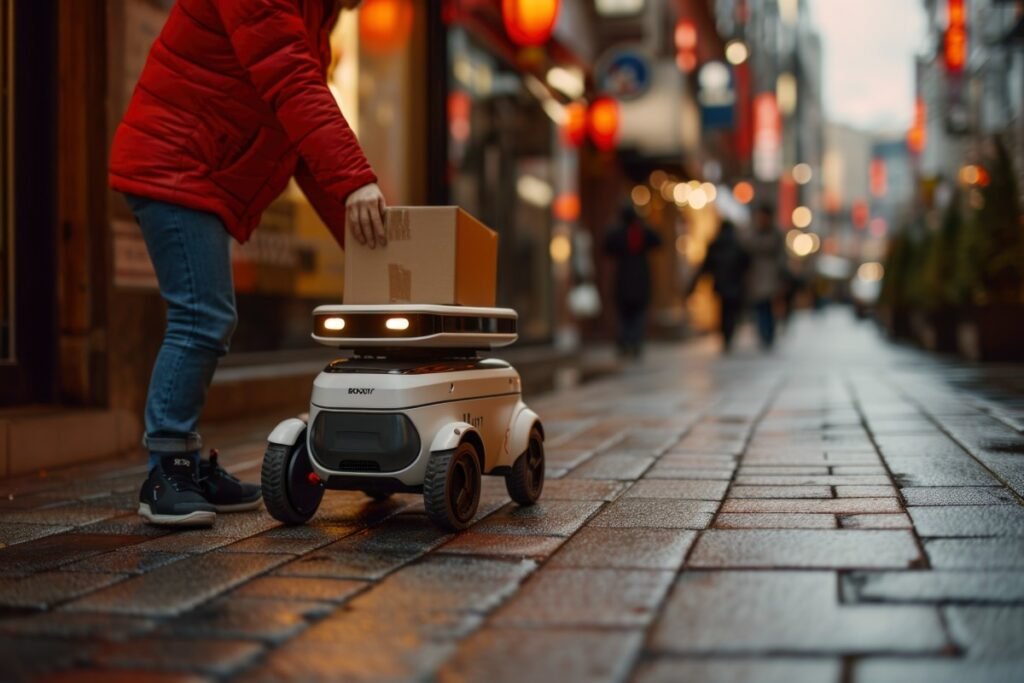
The category is broader than vacuum cleaners. Today’s robots for domestic service can include lawn-care machines, window-cleaning robots, pool-cleaning robots, and other task-specific devices.
The market data supports this shift. IFR found that domestic-task robots were by far the largest consumer robot service category in 2024.
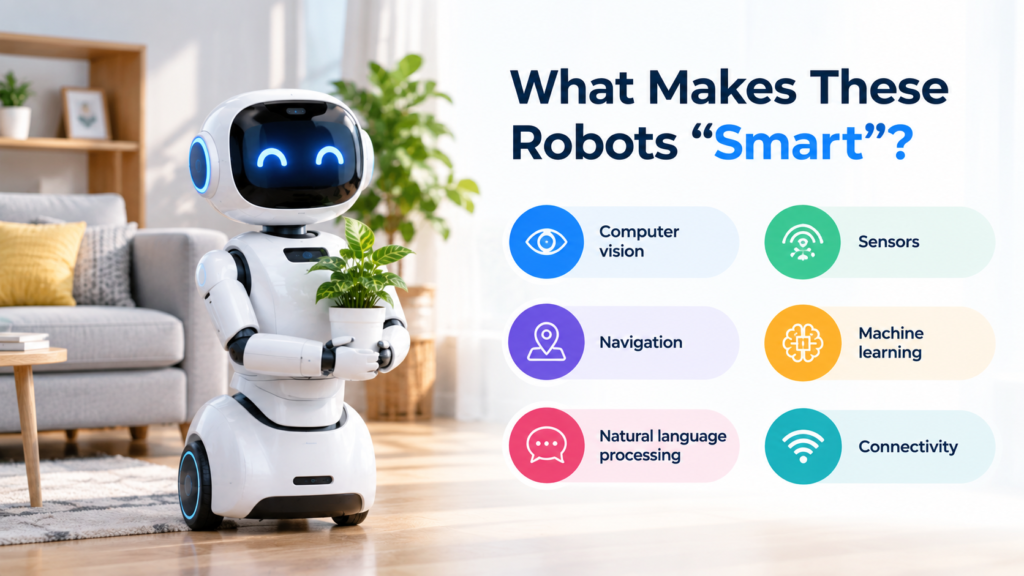
The AI is only one part of the system. A home robot typically combines several technologies:
This combination is what makes an AI robot assistant more useful than a device that simply follows a fixed timer.
There’s no single robot that’s best for every homeowner. Your choice should depend on the task you want to automate.
| Robot Type | Useful For | Best Suited To | Popular Products |
| Robot vacuum/mop | Floor cleaning | Busy households | Roborock Q7 M5+, Ecovacs DEEBOT N50 Pro Omni |
| Lawn robot | Grass maintenance | Homes with lawns | Segway Navimow X390, MAMMOTION LUBA 2 AWD 3000X |
| Window robot | Glass cleaning | Hard-to-reach windows | ECOVACS WINBOT W2 PRO Omni, CHOVERY Window Cleaner Robot |
| Security robot | Monitoring | Homeowners wanting remote visibility | Amazon Astro, AIONIOS ata05 Camera Robot |
| Social robot | Interaction and reminders | Users interested in assistance or companionship. | ElliQ 3, Enabot EBO X |
| Cooking robot | Selected food-preparation tasks | People wanting kitchen automation | Thermomix TM7 AI Edition, Cecotec Mambo Unique |
The price varies enormously because you’re not buying one standard product category. A basic cleaning robot can cost far less than an advanced multi-function machine.
Instead of how much, consider the total ownership cost. Look at replacement parts, maintenance, subscriptions, accessories, electricity, and warranty coverage.
I also recommend starting with one task. If cleaning is your biggest headache, buy a cleaning robot first. You can always expand later.

This is where the conversation gets exciting. Humanoid robots for household chores are beginning to operate in human-designed spaces and potentially handle a wider range of physical tasks.
But I wouldn’t buy one based on a futuristic promise alone.
Specialized robots still dominate the consumer market. Humanoid systems face major challenges involving safety, reliability, dexterity, cost, and operating in unpredictable homes. Recent industry reporting also shows that specialized robots remain much more practical for real-world tasks than humanoid systems.
In other words, don’t buy a robot because it looks like something from a science-fiction movie. Buy it because it performs a task reliably.
Before spending your money, ask yourself:
Privacy deserves particular attention. A connected robot may collect information about your home, movements, or surroundings. NIST recommends considering privacy, security, transparency, reliability, and other trustworthiness factors when evaluating AI systems.
So, check the manufacturer’s privacy policy and security practices before connecting a robot to your home network.
The future of the best household robots is unlikely to arrive as one magical machine that does everything. I expect progress to come through better navigation, stronger AI, improved object recognition, smarter connectivity, and robots that become better at specific household jobs.
For you as a homeowner, that is actually good news. You don’t need to wait for a perfect robot. Start with the chore you would most like to stop doing. If today’s technology can handle it reliably at a price you’re comfortable with, that’s probably the right place to begin.
Share your insights on upcoming innovations to Tech: Write For Us. Publish your New Tech Updates and deliver the Best Tech News to our audience.
Some of the best AI robots for home include:
Task-specific cleaners cost around $300 to $1,500. Interactive companions can cost approximately $100 to $500. Patrol and security assistants cost around $1,000 to $1,600. Lastly, full-scale humanoid assistants for early-access consumer models can cost around $5,900 to $20,000.
Yes, they can for targeted single tasks. Cleaning floors, mopping, vacuuming, wiping down low glass, and patrolling spaces are well-developed features. However, AI robots are still in development for complex tasks. Multipurpose chores like folding laundry, loading the dishwasher, or picking up cluttered objects are currently handled by early-access humanoid units, though often slowly or requiring guidance.
AI robots are safe to use around children and pets since they’re equipped with pressure sensors, cameras, and LiDAR. They stop instantly when encountering unexpected movement or soft barriers. Soft-shell exteriors and lightweight joint controls minimize injuries from accidental contact. Local data processing and physical camera shutters also help address privacy concerns around kids and family members.
AI uses LiDAR, spatial mapping, computer vision, and cloud and OTA updates to learn and navigate your home. They use lasers and depth cameras to build a 3D floor plan of your home in real time. Neural networks are trained on millions of object images to recognize common household items like shoes, cables, and pet bowls to steer clear. Software updates continually update the robot’s onboard models, improving obstacle handling and interaction capabilities over time.

As a tech-savvy Digital Marketing Specialist at Digital Concepts for the past five years, Sushmita Banerjee bridges the gap between complex tech and impactful storytelling. She channels her expertise into writing thought-provoking content covering everything from AI and software to the latest gadgets and breakthrough tech trends.