I still remember how easy it was to spot a scam email a few years ago. Today, AI can create messages, voices, and even videos that look alarmingly real. As a result, cyber threats have become more sophisticated and difficult to detect, exposing businesses and individuals to risks. Cyber threats are extremely dangerous in this growing digital landscape. In 2026, businesses and individuals face new risks from AI-powered scams, ransomware attacks, data breaches, cloud vulnerabilities, and deepfake fraud.
Understanding these threats is the first step toward protecting your personal information, finances, and digital assets. Below are the top 5 cybersecurity risks explained. According to cybersecurity experts, artificial intelligence is changing both defense and attack strategies. Hackers are using AI tools to automate attacks, create convincing scams, and exploit vulnerabilities faster than ever before.
Robert Mueller (Former FBI Director) once said, “I am convinced that there are only two types of companies: those that have been hacked and those that will be. In cybersecurity, a threat is any action that has the potential to negatively impact an organisation’s operations, procedures, systems, or data.”
Cybercrime is no longer a niche problem. A single attack can lead to financial loss, identity theft, operational disruption, reputational damage, and much more. Whether you run a business or simply use online banking, understanding emerging cyber threats can help you stay one step ahead of cybercriminals.
| Cyber Threat | Main Risk | Who Is Most Affected |
| AI-Powered Phishing | Identity theft and financial fraud | Individuals and businesses |
| Ransomware 3.0 | Data encryption and extortion | Organizations and government agencies |
| Deepfake Scams | Financial and reputational damage | Businesses and public figures |
| Cloud Security Breaches | Data exposure | Companies using cloud services |
| IoT Device Attacks | Unauthorized access to networks | Smart home and business users |
Traditional phishing emails often contained spelling mistakes and suspicious language. In 2026, attackers use AI to generate highly personalized messages that look legitimate.
These scams can mimic colleagues, banks, service providers, and even family members. Becoming a possible threat to the user who would be unable to distinguish between real and fake emails.
An AI-driven cyberattacks prevention guide starts with understanding how cybercriminals use artificial intelligence to automate phishing campaigns. Avoid clicking unknown links, use advanced email security filters, and be very vigilant while recognising phishing attempts.
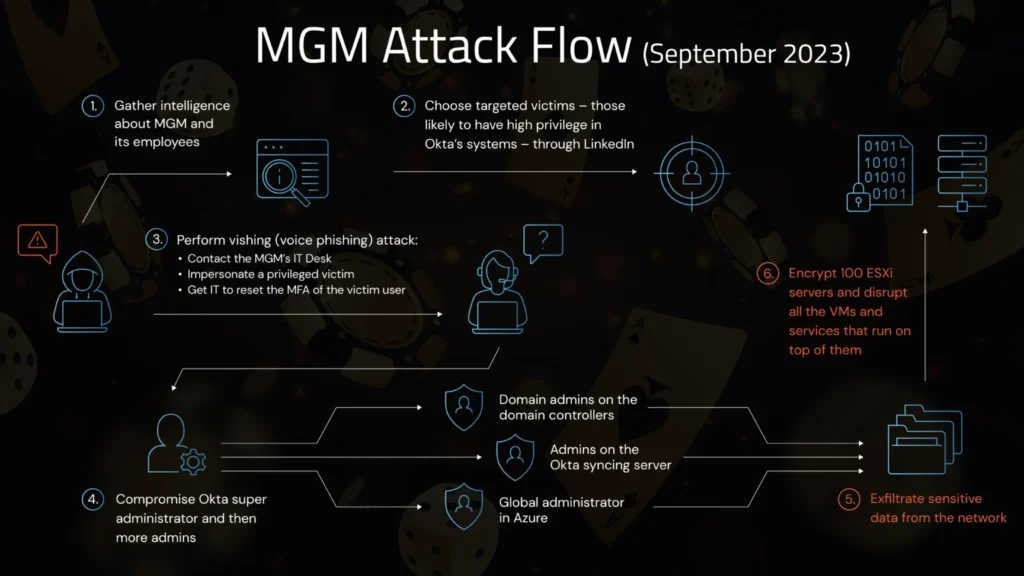
Hackers used social engineering techniques to gain access to MGM Resorts’ systems, and online reservations. The attack reportedly cost the company around $100 million.
Ransomware remains one of the most dangerous cyber threats. In 2026, attackers are expected to combine AI automation with ransomware campaigns, allowing them to identify weaknesses and spread malware more efficiently. Sudden inability to access files, unknown system activity, and sudden software installations are considered warning signs.
Following the best practices against ransomware in 2026 can significantly reduce the risk of data loss and business disruption. Regular backups, multi-factor authentication, and most importantly, employee awareness are the most effective defenses against modern ransomware attacks.
Attackers compromised software updates from SolarWinds, allowing malicious code to reach thousands of customers.
Deepfake technology has improved dramatically. AI-generated videos, voices, and images can now closely resemble real people. Common scams include fake customer support calls, social media impersonation, unnatural voice patterns, and many more. Understanding deepfake scams and how to detect them is becoming increasingly important, and being cautious can reduce the chances of these scams.
A finance employee at a multinational company was tricked into transferring nearly $25 million after attending a video meeting featuring AI-generate deepfake versions of company executives.
Businesses increasingly rely on cloud platforms to store sensitive information”. While cloud providers invest heavily in security, misconfigured settings remain a major source of data exposure. Giving unauthorized access and creating weak passwords can expose you to these types of risks.
Many data breaches result from cloud security misconfigurations. Conduct regular cloud security audits, implement role-based access control, and Encrypt data and monitor user activity to stay safe.
Toyota revealed that a cloud configuration error exposed customer information linked to its connected services. The issue remained undetected for an extended period.
Smart devices are everywhere—from home security cameras and smart TVs to industrial sensors and connected vehicles. Smartphones, medical devices, and security cameras are considered common targets. Unfortunately, many IoT devices are released with weak security settings, making them attractive targets for cybercriminals.
Many IoT vulnerabilities stem from outdated firmware and limited built-in security controls. As connected devices become more widespread in homes and workplaces, securing them is essential to preventing unauthorized access and compromise. Moreover, updating device firmware regularly and purchasing devices from reputable manufacturers can mitigate the problem by disabling unnecessary features.
The Mirai malware infected thousands of internet-connected devices, such as cameras and routers.
Cybersecurity not only disrupts the search algorithm AI integration but also prohibits data retrieval and generation. It is no longer solely the responsibility of IT departments.
Every employee, customer, and internet user plays a role in maintaining digital safety. Cybersecurity is not a one-time task; rather, it is an ongoing commitment. Cybersecurity makes the digital sphere a better place. As AI technology continues to evolve, both attackers and defenders will gain new capabilities. The organizations and individuals who prioritize cybersecurity education, strong security practices, and proactive monitoring will be best positioned to navigate the digital challenges of 2026.
AI-powered phishing, bullying, and hacking are expected to be one of the most significant cyber threats.
Businesses should maintain regular backups, keep systems updated, and use endpoint security tools to protect themselves from ransomware.
Deepfake scams use AI-generated videos, images, or voices to impersonate real people and deceive victims into sharing information or transferring money.
Many IoT devices have weak default security settings, outdated software, or insufficient protection against unauthorized access.
Yes. Multi-factor authentication remains one of the most effective ways to prevent unauthorized account access.
Yes. Small businesses are often targeted because they may have fewer cybersecurity resources than larger organizations.

As a tech-savvy Digital Marketing Specialist at Digital Concepts for the past five years, Sushmita Banerjee bridges the gap between complex tech and impactful storytelling. She channels her expertise into writing thought-provoking content covering everything from AI and software to the latest gadgets and breakthrough tech trends.